

Getting married in Quebec works a little differently from the rest of Canada, and it catches a lot of couples off guard. There is no marriage licence to pick up at a counter. Instead, your officiant builds a file with you, and a notice of your marriage goes online before your date.
Marriage is a legal act, so there are steps you both have to take. The good news is that none of them are difficult once you know the order they come in.
My mom Debi and I have watched a lot of weddings come together, and the couples who feel calm in the final weeks are almost always the ones who sorted the legal bits early. So here is how it usually goes.
Who is allowed to marry
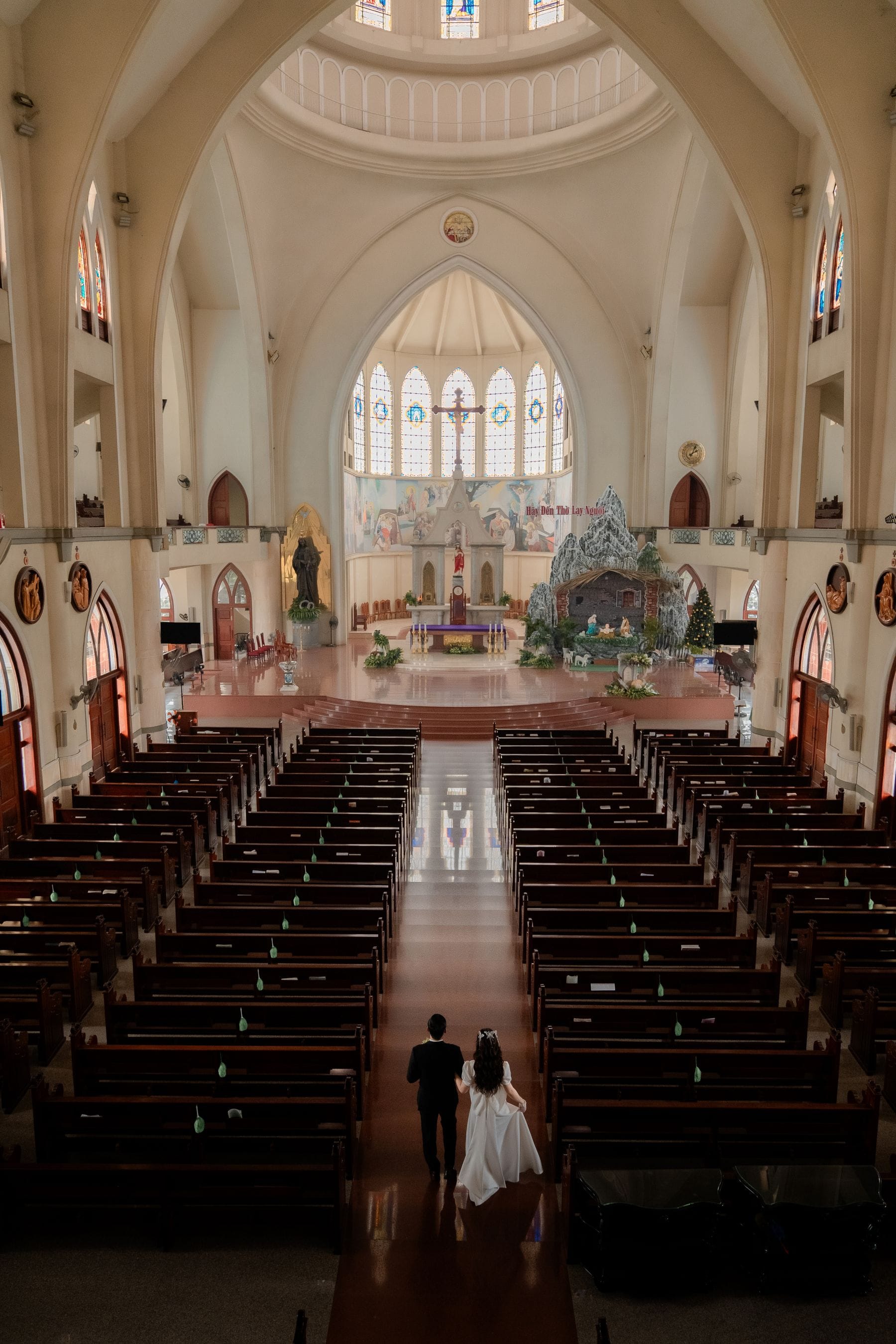
To make your marriage valid, you both have to meet conditions about your age, your family relationship, your matrimonial status and the giving of consent.
You must be at least 18, though you can apply to the courts for authorization to marry at 16 or 17. You also both have to be free of any bond of marriage or civil union, meaning single, divorced or widowed.
Two more rules surprise people. Your consent must be free and enlightened, given without constraints or threats and with a full understanding of what you are committing to. And you must be there in person. Proxy marriages are prohibited in Quebec, so you cannot send someone in your place.
Civil or religious, your officiant must be authorized
For your marriage to be valid it has to be solemnized by an officiant recognized by law, and that applies whether the ceremony is civil or religious. You can check the register of officiants kept by the registrar of civil status.
For a civil wedding in Quebec, that can be a clerk or deputy clerk of the Superior Court, a notary, a mayor, a member of a municipal or borough council, or a municipal officer.
You can also ask a relative or a close friend to officiate. They apply to the registrar of civil status to become a designated officiant, and once authorized they carry the same responsibilities as any other officiant.
For a religious ceremony, the officiant is a minister of religion authorized to solemnize marriages according to the rites of that religion. If you are still looking, you can browse officiants who are free on your date.
Your officiant also shapes where you can marry

This part matters more than people expect, because it can decide your whole venue search.
A court clerk marries couples at the courthouse, with exceptions for a health establishment or detention centre. A mayor, municipal councillor or municipal officer marries couples within their municipality. A notary can marry you anywhere agreed with them, and so can a designated relative or friend. A minister of religion marries couples in a place of worship.
So before you fall in love with a barn, a vineyard or a backyard, check that your officiant can actually marry you there. Once you know, you can look at wedding venues with confidence.
The interview and the documents
Before the ceremony you meet your officiant, who checks that you meet the conditions and asks you to sign the statement used to publish your marriage notice. If you are marrying at a courthouse, that interview is with a clerk or deputy clerk of the Superior Court.
For identity, you give the original of your birth certificate or a copy of your act of birth.
You also prove your civil status. That means a certified copy of the divorce certificate or irrevocable divorce judgment if you are divorced, a copy of the act of death or the death certificate if you are widowed, and a certified copy of the annulment or dissolution judgment if a previous marriage or civil union ended that way.
For a courthouse wedding you go in with a witness of full legal age who signs the declaration used for the publication. That person does not have to be a witness at the ceremony itself.
The 20 day notice
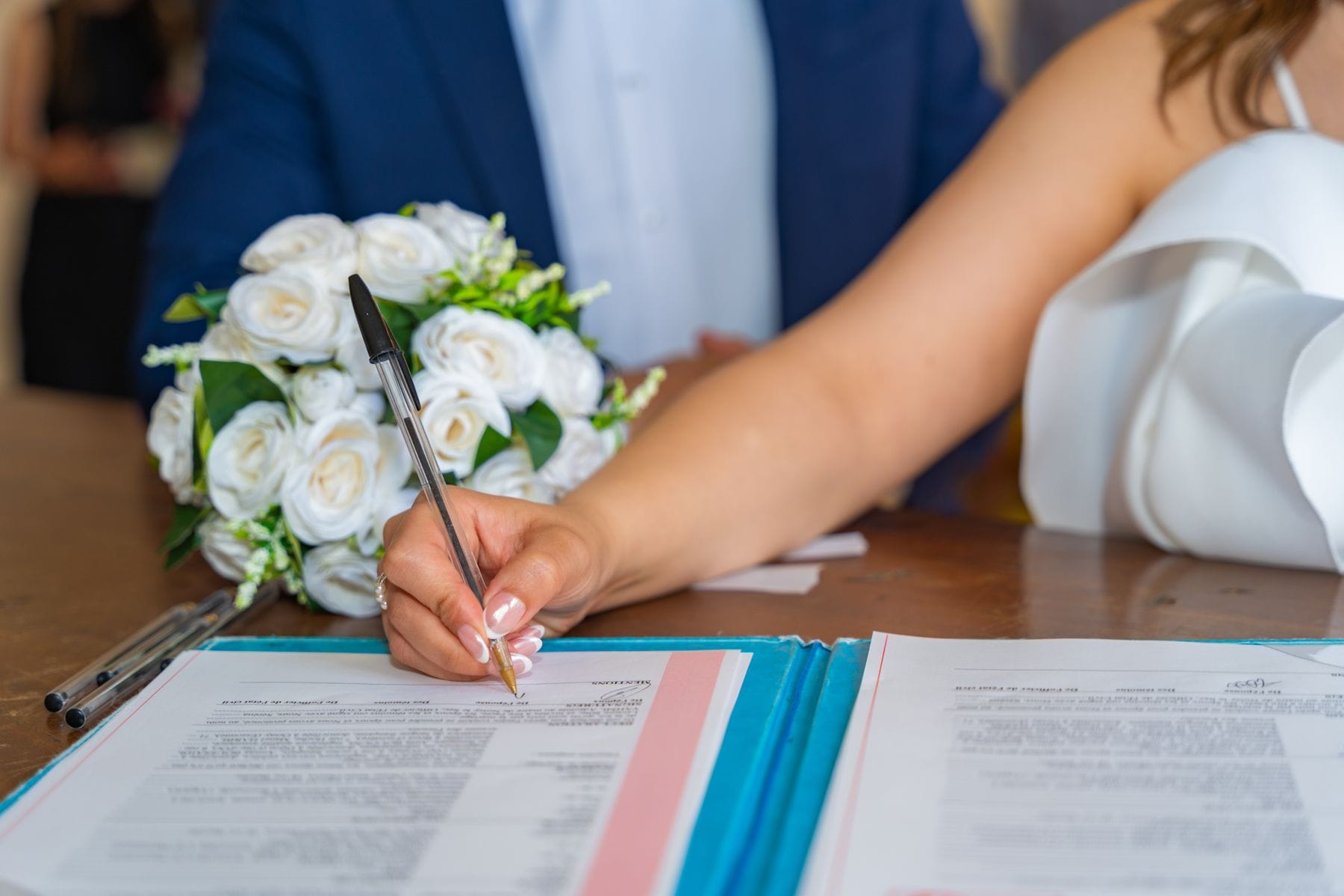
This is the step that drives your timeline, so read it twice.
Your officiant submits a notice of marriage to the registrar of civil status and must make sure it is posted on the website 20 days before the date of the marriage. In some cases the registrar can grant a dispensation from publication, and then no notice is produced.
It is one more reason to lock your date and your people early. If you are still comparing dates, you can search by date on OpenDates and see which venues and vendors are open. It is free, and you do not need an account.
On the day
There can be time restrictions depending on the place. Away from a courthouse, the marriage must take place between 9 a.m. and 10 p.m., and the officiant must perform the ceremony in French or English.
During the ceremony you both consent to take the other as your spouse and sign the declaration of marriage, in front of the officiant and two witnesses. A marriage witness does not need to know you both well, and does not have to be the same person who witnessed your marriage notice.
After that, the day is yours. Make sure your photographer knows when the signing happens, because those few minutes make lovely pictures.
After the wedding
The paperwork is mostly your officiant's job, which is a nice thing to hear.
They send the original declaration of marriage to the registrar of civil status within thirty days of the ceremony, and the original return of marriage to the Institut de la statistique du Québec within eight days. To get a certificate or a copy of your act of marriage, you contact the Directeur de l'état civil.
Two things are worth knowing before you order stationery. In Quebec both spouses keep their surname after they marry and must use their birth surname to exercise their civil rights, such as signing a contract or applying for a driver's licence, though socially you can use your spouse's surname if you wish. And a marriage contract, which you can sign before or after the wedding, must be notarized and signed before a notary.
A few costs and last checks
Expect an administrative fee for the solemnization itself, which varies depending on your officiant and venue. For a courthouse wedding you generally pay it at your interview with the clerk; any other officiant will tell you their fee and how to pay.
If you marry outside Quebec, make sure the marriage complies with the rules in force in Quebec as well as those where you marry.
Rules and fees can change. Confirm the details with the Ministère de la Justice du Québec and the Directeur de l'état civil, and ask your officiant early what they need from you.
Frequently asked questions
Do you need a marriage licence in Quebec?
No. Quebec marriage requirements work differently. Instead of a licence, your officiant meets with you, checks that you meet the legal conditions and publishes a notice of your marriage.
How far in advance do we need to plan?
The notice of marriage has to be posted on the registrar's website 20 days before your wedding date, so your officiant needs your file well before that. Most couples start much earlier anyway, because venues and vendors book up.
Can a friend or family member marry us?
Yes. A relative or close friend can apply to the registrar of civil status to become a designated officiant. Once authorized, they carry the same responsibilities as any other officiant.
Do we have to change our name after getting married in Quebec?
No, and in fact you cannot for legal purposes. Both spouses keep their surname and must use their birth surname to exercise their civil rights. Socially, you can use your spouse's surname if you want to.
Once the legal part is sorted
The paperwork is the easy bit. Finding people who are actually free on your date is the part that used to drive me round the bend when I was planning my own wedding.
That is exactly why we built OpenDates. You enter your wedding date and see the venues, caterers, florists, DJs and musicians and planners near you who still have that day open. No long email chains, no waiting a week to hear back. It is completely free for couples, always.
Happy planning! Kristina
Photos from Pexels.